Why an All-in-One Fitness App Is the Best Package: Meals + Workouts + Groups
The typical fitness phone setup in 2026: a calorie tracker for food, a separate app for the gym, a step counter, and a group chat where the motivation lives. Four apps, four habits, sometimes two subscriptions — and none of them talk to each other. This article makes the case, with research rather than vibes, for the opposite setup: one all-in-one fitness app where meal tracking, workout tracking, and your people live in the same place.
1. Your body runs one system — your data shouldn't run four
Fat loss and muscle gain are decided by the interaction of two things: energy in (food) and output plus stimulus (training). When those live in separate apps, the interaction is invisible. Nobody cross-references their lifting app against their food app on a Tuesday night.
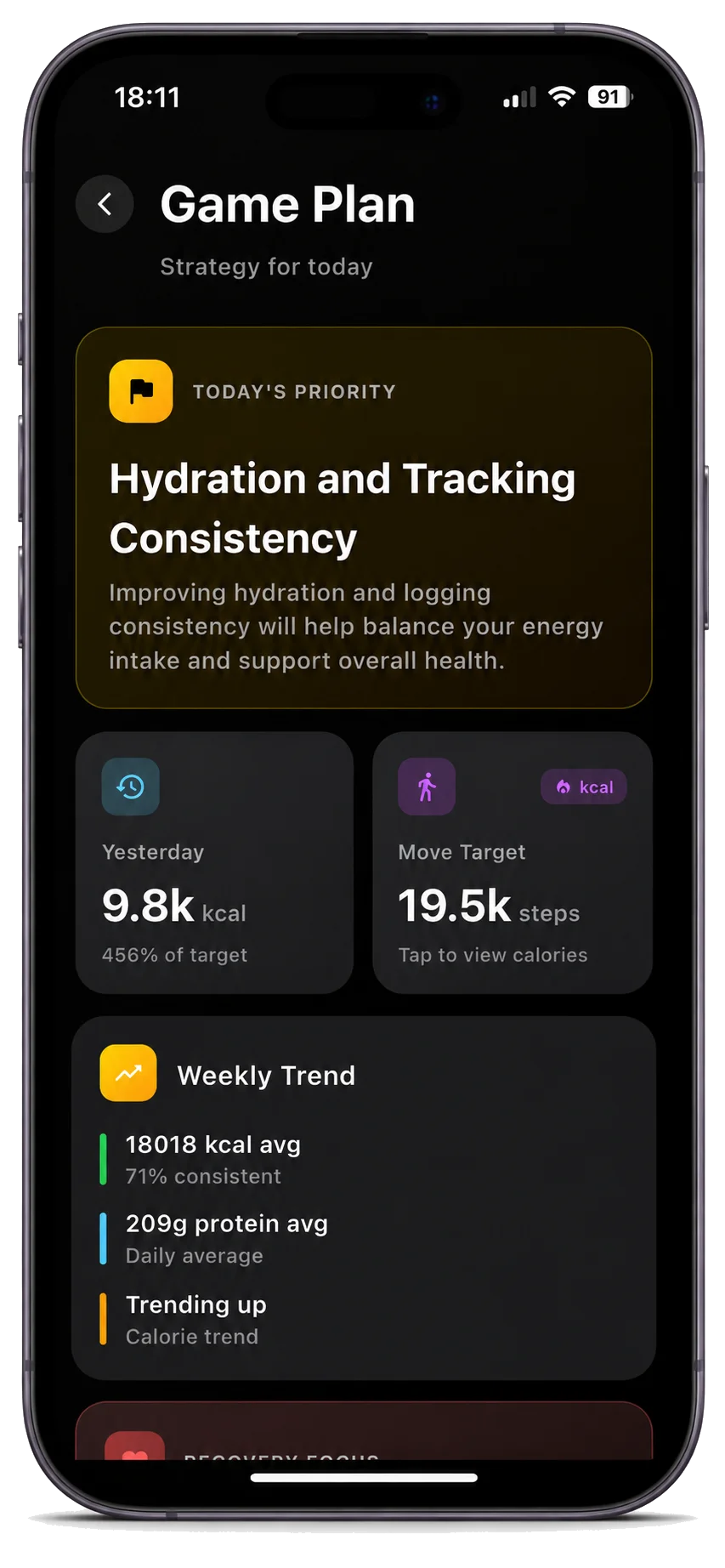
When one app sees both sides, the connections happen automatically:
- Workout calories flow into your daily target — a hard training day and a rest day shouldn't have the same food budget.
- Protein guidance reacts to training — the day you lift is the day protein matters most.
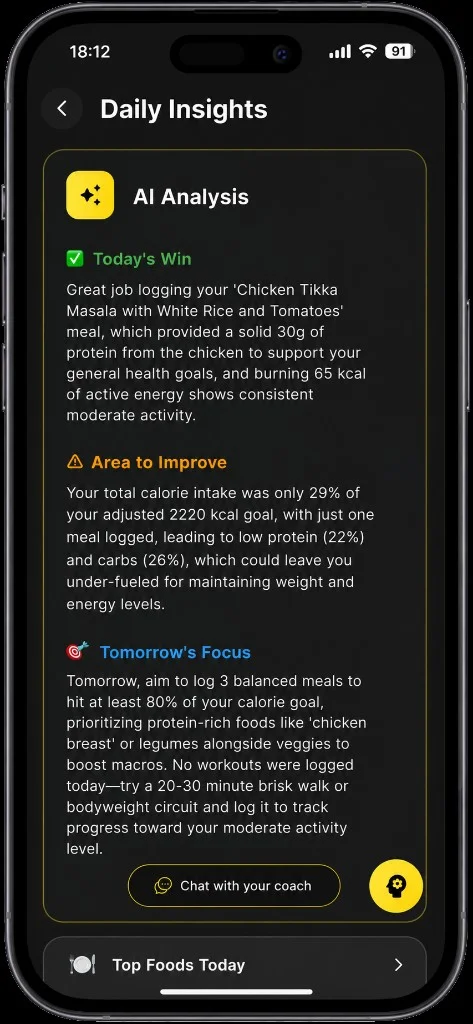
- Insights see the whole picture — "your weight stalled because weekend intake cancels your weekday deficit" is a conclusion no single-purpose app can reach.
Research on self-monitoring adds a reason to care: reviews consistently find that prompt feedback on what you log improves adherence and outcomes. Feedback built from half your data is half as useful.
2. Every extra app is a tax on the habit
The strongest finding in tracking research isn't about features — it's that consistency drives results. Trials found logging at least two eating occasions per day was the best predictor of weight loss. Anything that makes logging harder attacks the one variable that matters.
Two apps means two logins, two interfaces to learn, two logging habits to maintain, and two chances to quit — a chain that breaks at its weakest link. It also often means two bills: $40–80 a year for a food tracker plus a similar amount for a gym app. Consolidating isn't just tidier; it halves the friction and can cut the cost to zero, and lower friction is precisely what keeps the streak alive into week six, when results actually appear.
3. Groups are the most under-used multiplier in fitness
In a classic randomized trial, Wing & Jeffery compared people who joined a weight-loss program alone versus with friends plus social-support strategies. Among those who joined alone, 24% fully maintained their weight loss at month 10. Among those with friends and support: 66% — and 95% finished the program versus 76% of the solo group. A 2024 meta-analysis reached the same direction: social-support-based interventions improve weight-loss outcomes.
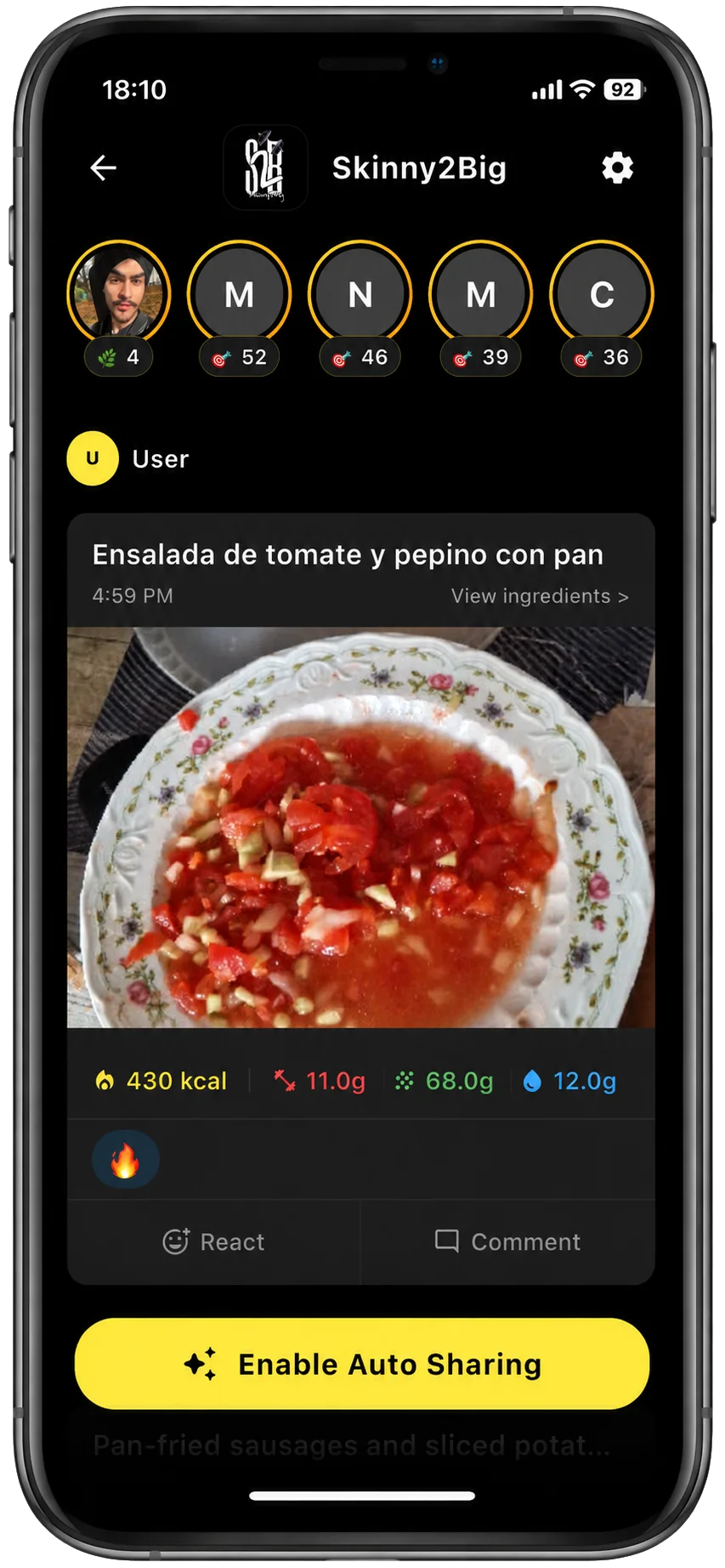
Most people try to bolt this on with a WhatsApp group — and it helps, until it becomes screenshots nobody sends by week three. Accountability works best when it's attached to the data: streaks your friends can see without you posting them, meals shared in one tap, a group that quietly notices when you stop logging. That only works when the groups live inside the tracker, next to the meals and workouts they're holding you accountable for.
4. The compounding loop: track → see → adjust → stay
Put the three pieces together and they reinforce each other in a loop separate apps can't close:
- Track meals and workouts with near-zero friction (seconds, not minutes).
- See combined feedback — intake versus output, protein versus training days, weekly patterns.
- Adjust next week from data instead of guesswork.
- Stay — because your group sees the streak, and quitting is now visible.
Each step feeds the next. That's the honest reason all-in-one beats best-in-class-times-four for most people: not that any single feature is magic, but that the loop only compounds when nothing falls between the apps.
What an all-in-one fitness app must include (the checklist)
| Requirement | Why it matters |
|---|---|
| Photo + barcode meal logging | Seconds per meal protects the two-logs-a-day habit |
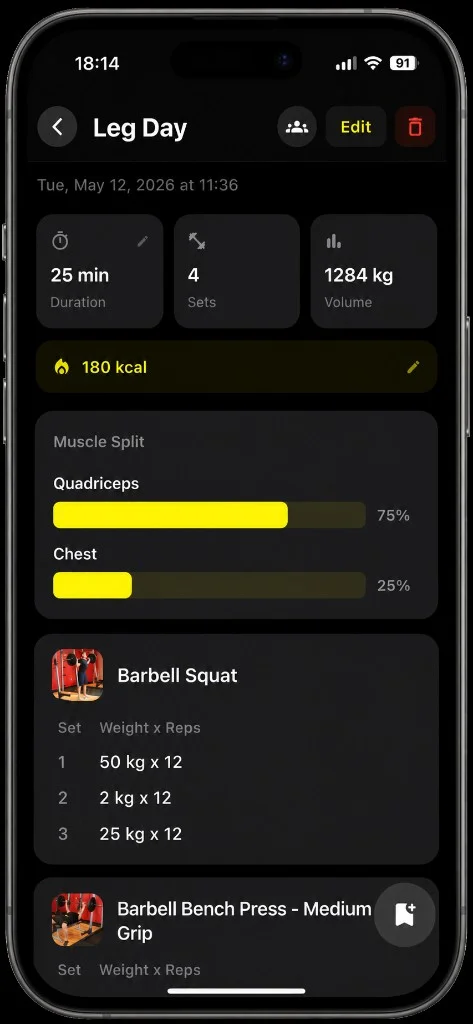
| Full workout logging (sets, reps, weight, rest timer) | Progressive overload needs real records, not step counts |
| Groups / shared streaks | The 66%-vs-24% maintenance gap lives here |
| Combined daily & weekly insights | Feedback improves adherence — only works with both data halves |
| Honest pricing | A paywalled core feature is a broken link in the loop |
Apps meeting the whole checklist are rarer than you'd expect — most trackers are excellent at one column and empty in the others. It's the package we built our own Cal Plus around: meal scanning, gym logging, and private groups in one free, ad-supported app. Whatever you choose, hold it against the checklist — the loop only works when every row is covered.
Frequently asked questions
Is an all-in-one fitness app better than separate apps?
For most people, yes: connected data (workouts adjusting food targets), half the logging friction, and usually lower cost. Specialists only win if you genuinely need their depth.
Do groups actually improve results?
Research says clearly yes — 66% vs 24% full weight-loss maintenance in the classic friends-and-support trial, confirmed in direction by a 2024 meta-analysis.
What should an all-in-one app include?
Photo and barcode meal logging, full set/rep workout logging with a rest timer, groups, combined insights, and no paywall on the core loop.
Are all-in-one fitness apps expensive?
Paid suites run $60–100+ per year, but ad-supported options keep the full package free — Cal Plus is one example.
About this guide: written by the team behind Cal Plus, a free all-in-one calorie, workout and groups app (iOS · Android). The research above is app-agnostic — the loop works wherever all the pieces live together.
Sources: Wing & Jeffery 1999: Benefits of recruiting participants with friends (J Consult Clin Psychol) · 2024 meta-analysis: social-support-based weight-loss interventions (Int J Obesity) · Tracking two eating occasions per day as adherence marker · Systematic review: dietary self-monitoring