Why AI Calorie Trackers Help You Reach Your Goals Faster
Let's start with what an AI calorie tracker doesn't do: it doesn't change the maths. Fat loss still comes from a calorie deficit, muscle gain still needs a surplus plus training. So why do people using AI trackers so often progress faster than people counting in their heads or in a notebook? Because the research on dieting keeps pointing at one boring, decisive factor — consistency of tracking — and AI attacks exactly the thing that kills consistency: friction.
What the research actually shows
A systematic review of dietary self-monitoring found study after study linking consistent food logging with greater weight loss. In randomized weight-loss trials, logging at least two eating occasions per day explained the most variance in results at six months. And people stay adherent far longer on phones than paper — in one comparison, 62% of smartphone users were still tracking by the study's end versus 34% with paper diaries.
Notice what's missing from those findings: precision. The studies don't say "people whose entries were most accurate lost the most weight." They say the people who kept logging did. That's the lever AI actually pulls.
Five ways AI speeds up real progress
1. It collapses logging time from minutes to seconds
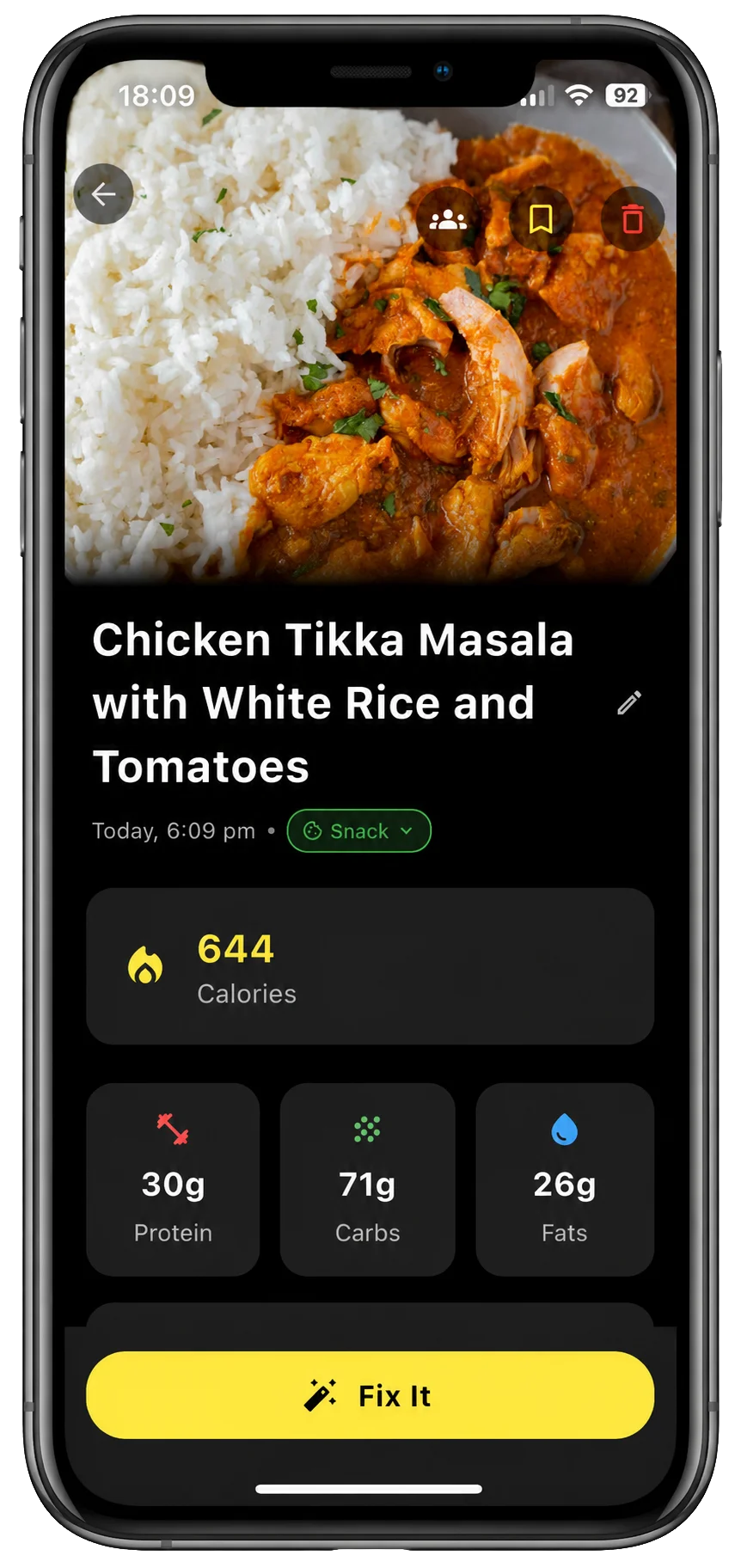
The classic food-diary death spiral: search database → scroll 40 near-identical entries → guess a serving size → repeat for four foods → skip it "just tonight" → quit by week three. A photo scan replaces that with point, shoot, confirm. When logging a meal costs five seconds, the "can't be bothered" excuse loses its power — and week six actually happens.
2. It keeps the streak alive on your worst days
Diets aren't lost on grilled-chicken days; they're lost on the chaotic ones — restaurants, travel, someone's birthday cake. Those are precisely the meals nobody wants to manually reconstruct, and precisely where a camera shines. Logging the messy days is what keeps the two-meals-a-day adherence threshold intact when it matters most.
3. The act of logging changes what you eat
Self-monitoring research describes a well-known awareness effect: knowing you'll log it makes you notice it. The handful of crisps before dinner, the third coffee with syrup — once they show up on a screen with a number attached, portions quietly shrink and swaps quietly happen. The tracker isn't just measuring behaviour; measuring is the behaviour change.
4. Feedback loops catch problems in days, not months
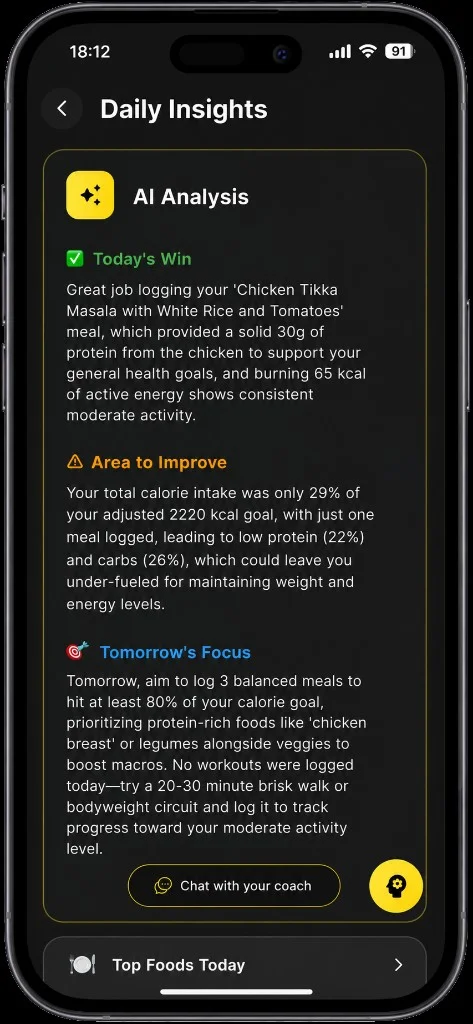
Reviews of self-monitoring interventions note that prompt feedback improves both adherence and outcomes. This is where modern trackers earn their keep: daily and weekly summaries turn raw logs into "your protein crashes every weekend" or "you're averaging 300 over target on Fridays". Without data, a stall takes a frustrating month to diagnose. With it, you adjust next week.
5. It closes the loop with training
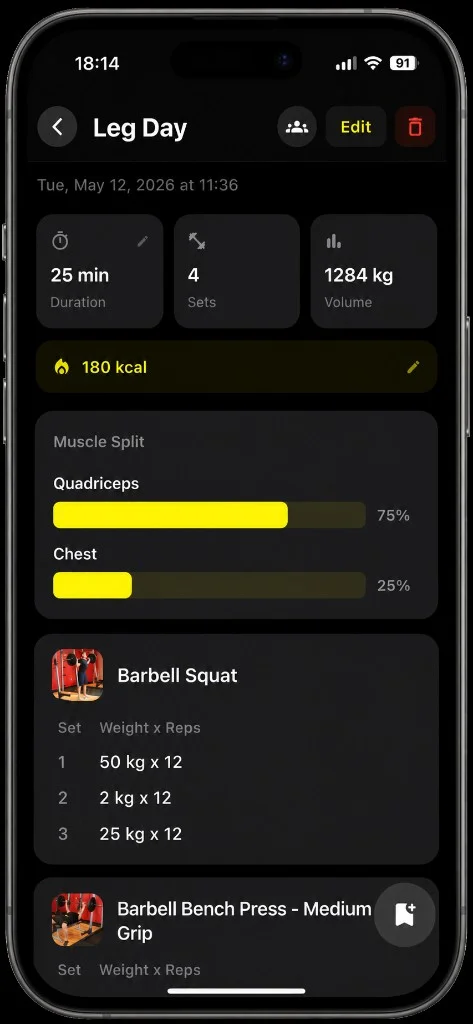
Body composition is decided by intake and output together. Trackers that also see your workouts can hold your targets steady on rest days and feed you back the full picture — one reason we built workout logging into our own tracker rather than leaving it to a second app.
What AI honestly can't do
- Beat physics. No app creates a deficit for you — it just makes the deficit visible and manageable.
- Be exact. Photo scans carry roughly 15–30% error, mostly from portion guessing (we've covered the accuracy research in detail). Review scans, barcode packaged food.
- See what you don't log. Untracked drinks, cooking oil, and "it was just a bite" still count. The app removes friction, not responsibility.
- Replace patience. Faster here means weeks instead of quarters — not days.
How to actually get faster results with one
- Log at least two eating occasions every day — the adherence threshold the trials identified. Perfect days aren't required; logged days are.
- Scan the chaos meals especially. Restaurant plate, party food — a rough scan beats a blank day.
- Set a protein target, not just calories. It protects muscle in a deficit and keeps you full.
- Read your weekly summary. One pattern spotted per week compounds fast.
- Weigh in a few times a week, judge the trend, not the day. Water weight lies; three-week trends don't.
Does the app choice matter?
Less than the habit does. Any tracker you'll open every day beats a better one you won't. The practical filter is cost-of-consistency: AI scanning sits behind subscriptions in most big apps (we've compared the options here), which is fine if you'll pay, and a real barrier if you won't. Ad-supported options keep scanning free — that's the model of our own Cal Plus — so "I'll just skip logging this month" never gets a financial excuse.
Frequently asked questions
Do calorie tracking apps actually work?
Yes — when used consistently. Reviews link tracking frequency with greater weight loss, and logging at least two eating occasions a day was the strongest predictor in trials.
How does AI make tracking faster?
Photo scanning cuts logging from minutes to seconds, so more days actually get logged — and phone-based trackers keep people adherent far longer than paper diaries.
Do I need to track forever?
No. A few months of honest tracking teaches you what food actually contains; most people then maintain with occasional check-ins.
What can't an AI tracker do?
Change the maths or see what you don't log. Scans are estimates (~15–30%), untracked calories still count, and the deficit still has to be yours.
About this guide: written by the team behind Cal Plus, a free ad-supported AI calorie and workout tracker (iOS · Android). The research above holds for any tracker — ours included.
Sources: Systematic review: dietary self-monitoring in behavioural weight loss · Tracking two eating occasions per day as adherence marker · Systematic review: AI-based image dietary assessment accuracy