How Accurate Are Food Scanner Apps? What the Research Says
Point your camera at a plate, get calories. It feels like magic, and in 2026 nearly every calorie app sells it. But how accurate is AI food scanning really — and does it matter? Here's what happens technically when you scan a meal, what peer-reviewed studies found, and how to get scans good enough to actually hit your goals.
What happens when you scan a meal
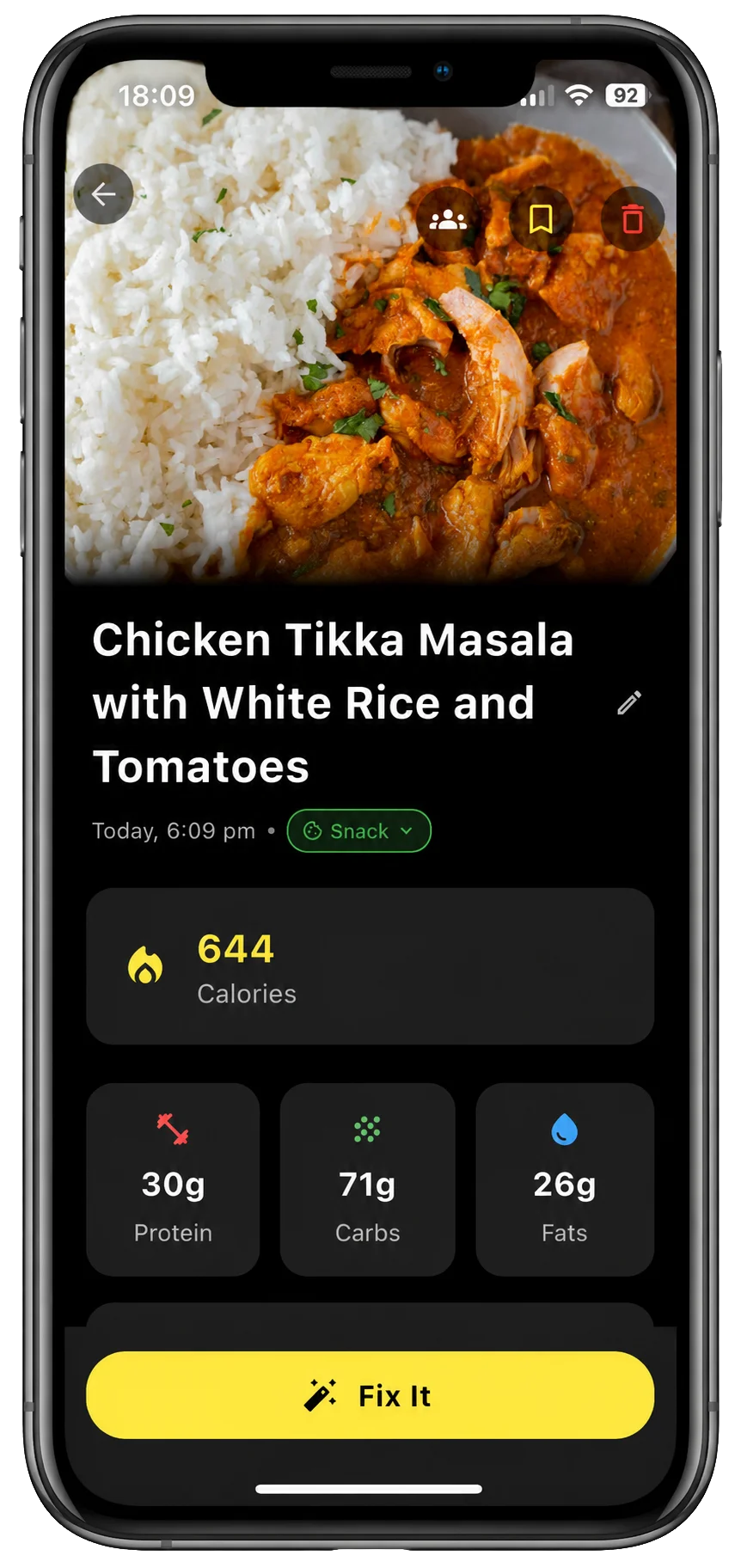
- Recognition. A vision model looks at the photo and identifies what's on the plate — "rice, chicken curry, tomatoes".
- Portion estimation. The model guesses how much of each item there is, from a flat 2D image. This is the hard part.
- Database lookup. Each identified food gets matched to nutrition data, and the app sums calories, protein, carbs, and fat.
Steps 1 and 3 are largely solved problems. Step 2 is where every app on the market — free or paid — earns or loses its accuracy.
The honest numbers from research
A systematic review of AI-based image dietary assessment found calorie estimation errors ranging from under 1% up to ~38% across studies, with typical real-world error around 15–30%. Identification of common foods is strong; portion size is the main source of error, and mixed or unfamiliar cuisines score worse than simple single foods.
Translation: your grilled chicken breast scans well. Your grandmother's layered casserole is a guess. Hidden oils, dressings, and anything under the surface of a dish add error no camera can see. Any app claiming lab-grade precision from one photo is overselling — what a good app does is get close, fast, and make correcting easy.
Why "close enough, every day" still works
Here's the part the accuracy debate misses: the research on weight management doesn't reward precision, it rewards consistency. A systematic review of dietary self-monitoring found consistent tracking repeatedly associated with greater weight loss, and trial data showed that logging at least two eating occasions per day was the best predictor of results. People also stick with phone tracking far longer than paper diaries.
A scan that's 20% off but takes 5 seconds beats a perfect weighed-and-measured entry you'll abandon by week three. The camera's job is to remove friction; your job is a quick sanity check.
7 ways to get more accurate scans (in any app)
- Shoot at a slight angle (30–45°), not straight down — it gives the model depth cues for portions.
- Good light, plain background. Shadows and clutter confuse recognition.
- One meal per photo. Scan your plate, not the whole table.
- Keep a size reference in frame — a fork or a standard plate helps portion estimates.
- Scan before you mix. Curry over rice scans better than curry stirred into rice.
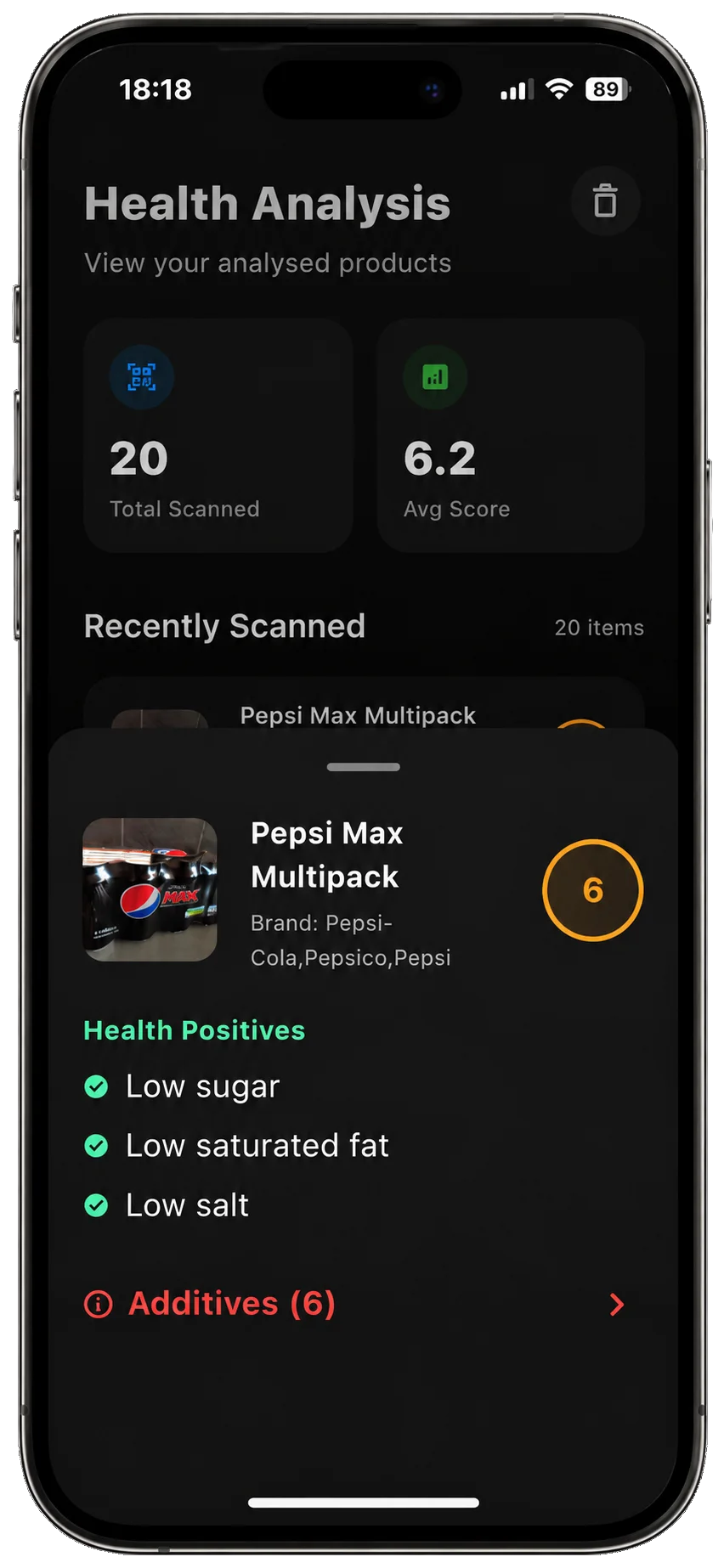
- Use barcodes for anything packaged. Label data is exact; never photo-scan a protein bar.
- Review before saving. If the app says 300g of rice and it was clearly 150g, fix it — correcting portions removes the single biggest error source.
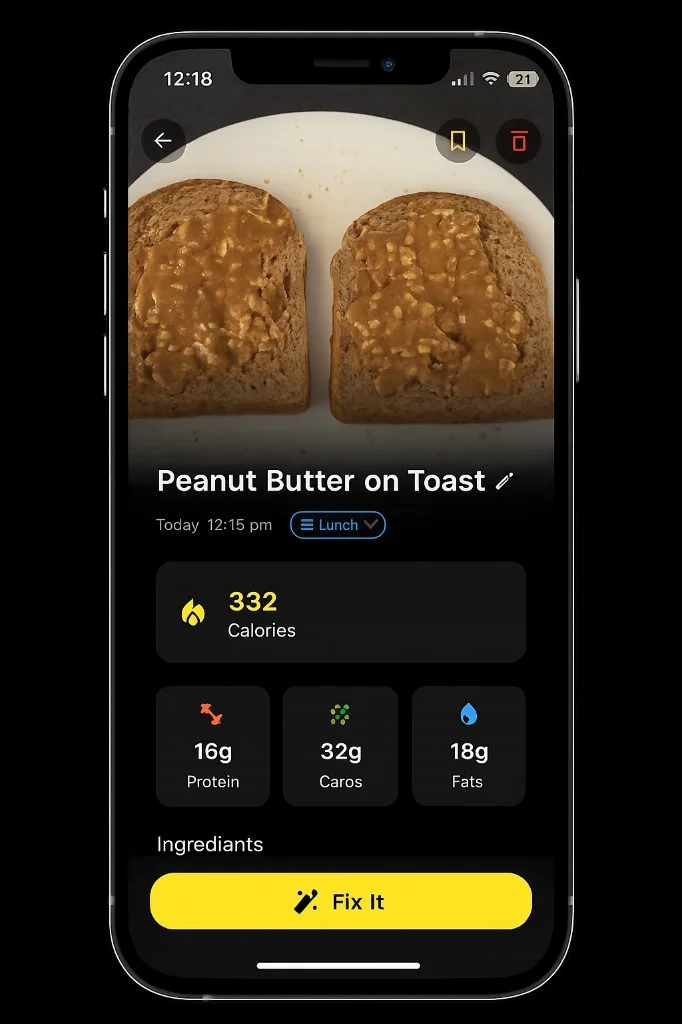
Photo vs barcode vs manual: when to use which
| Method | Best for | Accuracy |
|---|---|---|
| Photo scan | Cooked meals, restaurants, speed | Good estimate (~15–30% error), fix portions |
| Barcode scan | Packaged food | Exact label data |
| Manual search | Simple staples you eat daily | Exact if weighed |
What scanning costs in different apps
Because AI scans run on servers, most well-known trackers charge a subscription for them once a trial ends. The exception is the ad-supported model, where occasional ads pay for the servers — our own Cal Plus works that way, keeping photo, barcode, and menu scanning free and unlimited. Whichever app you pick, apply the seven tips above; the physics of a 2D photo are the same everywhere.
Frequently asked questions
How accurate are food scanner apps?
Research puts typical calorie errors at 15–30%: food identification is strong, portion estimation from a photo is the weak point. Simple foods scan best; mixed dishes are harder.
Does tracking work if scans aren't perfect?
Yes — studies link tracking consistency, not precision, with results. Logging at least two eating occasions a day was the strongest predictor in trials.
How do I make scans more accurate?
Angle the shot, use good light, one meal per photo, keep cutlery in frame for scale, scan before mixing, barcode packaged items, and correct portions before saving.
Which apps scan food photos for free?
Most big trackers charge a subscription for it. Ad-supported apps like Cal Plus keep scanning free and unlimited.
About this guide: written by the team behind Cal Plus, a free ad-supported calorie and workout tracker (iOS · Android). The accuracy numbers above apply to our scanner too — that's exactly why the app has a "Fix It" button.
Sources: Systematic review: AI-based image dietary assessment vs ground truth · Systematic review: dietary self-monitoring in weight loss · Tracking two eating occasions per day as adherence marker